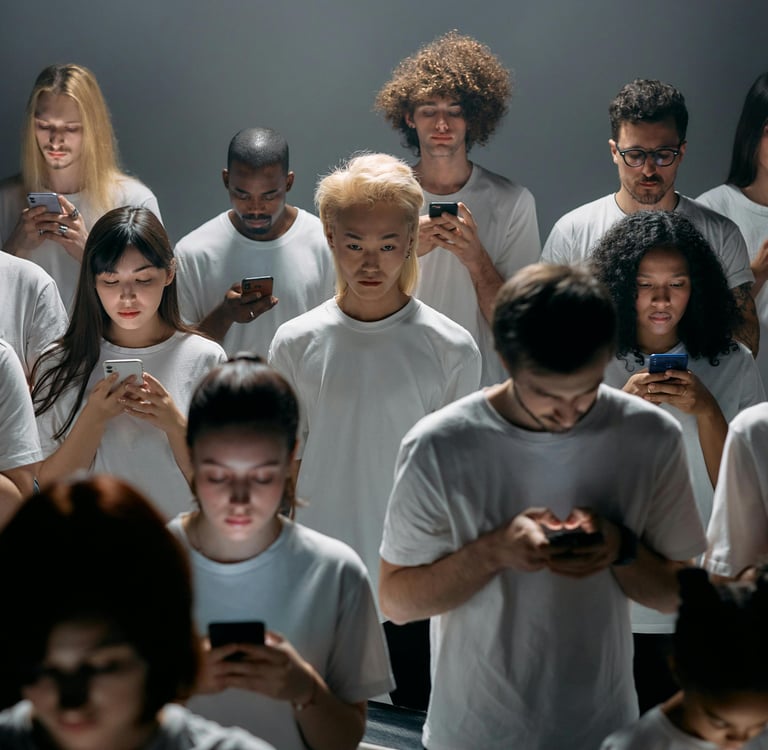
Digital Wellness Tools That Help You Disconnect (So You Can Actually Reconnect)
Let’s be honest.
Most of us don’t “check our phones.”
We live in them.
Your breathing slows.
Conversations feel deeper.
You don’t feel as rushed.
Your thoughts feel clearer.
You sleep harder.
You remember what it feels like to:
Sit outside without documenting it.
Eat without scrolling.
Think without input.
Be alone without distraction.
It’s subtle. But powerful.
You open Instagram for five minutes and suddenly it’s dark outside. You answer one email and somehow end up doom-scrolling. You go to bed exhausted… but still scroll because your brain refuses to power down.
And then we call it “relaxing.” Do I own my attention anymore?
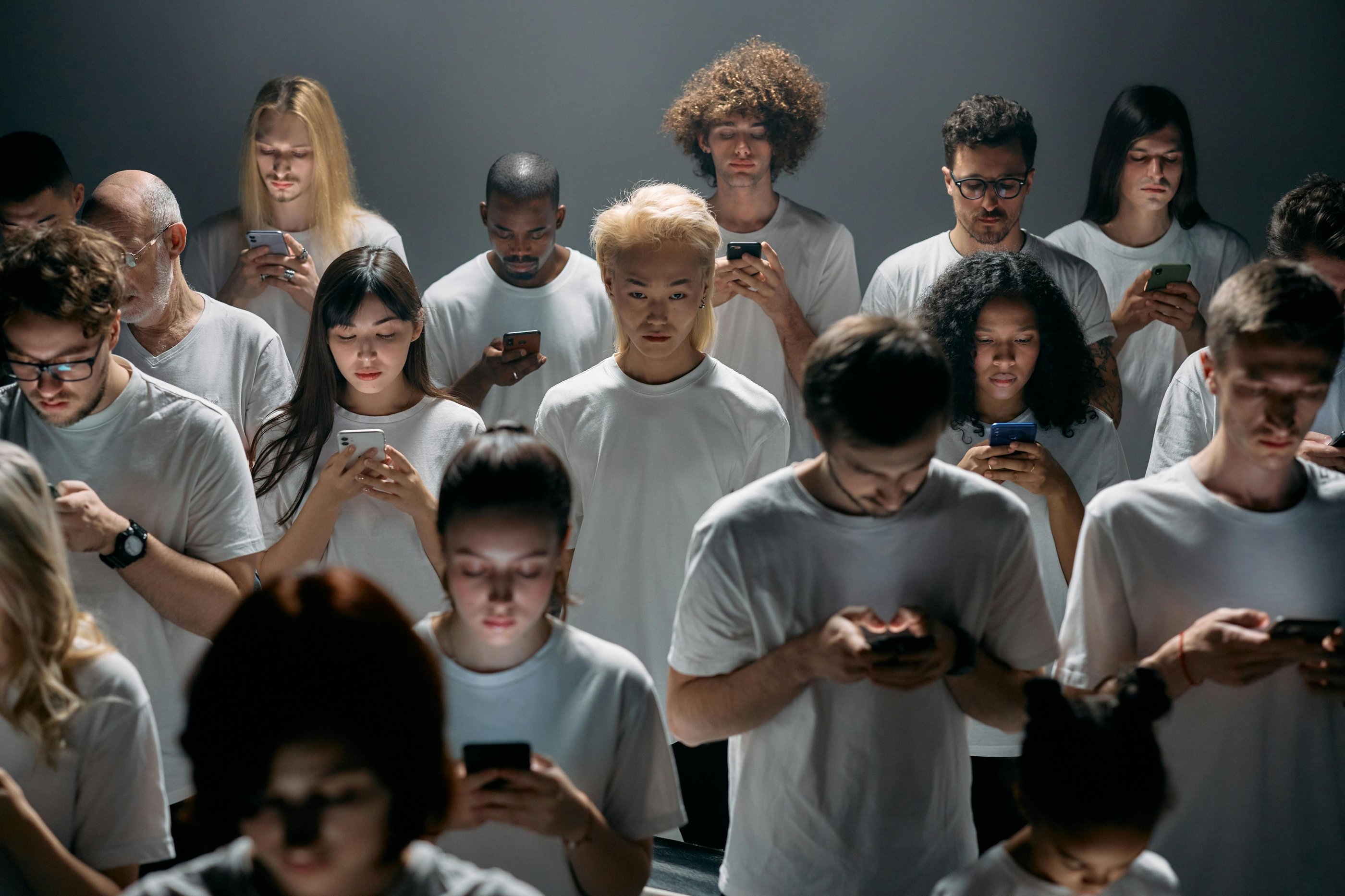
The average person spends around 6–7 hours a day on screens, checking their phone close to 100 times daily. Not because we’re weak. Not because we lack discipline.
Because these tools are designed to hold us.
Digital wellness isn’t about throwing your phone in a lake or becoming a minimalist monk. It’s about creating boundaries that protect your energy — without disconnecting from your real life.
Here are digital wellness tools that actually help you unplug
1. App Blockers (For When Willpower Isn’t Enough)
The issue isn’t that we don’t know we scroll too much.
It’s that by the end of the day, we’re tired. Mentally done. And the easiest thing to do is sit on the couch and let Instagram or TikTok carry us somewhere else for a while. Evenings are the hardest. It’s that willpower dies around 9:47 PM. The problem isn’t that we don’t know we scroll too much.
One video turns into forty-five minutes.
And suddenly it’s 10:38 PM and you’re annoyed at yourself.
That’s where app blockers come in. Not as punishment. Not as some dramatic “digital detox.”
Just as a little guardrail.
App blockers don’t shame you — they simply create a pause to interrupt the autopilot forcing that tiny moment of awareness:
It gives you a second to ask, “Is this what I actually need right now?”
If you choose one, look for something simple. Something that lets you set quiet hours without making your phone feel like a prison.
Helpful features to look for:
• Scheduled downtime (for example, social apps off from 8 PM – 8 AM)
• Custom daily limits so you don’t have to track it yourself
• “Strict mode” for nights when you know you’ll override it
• Focus timers if you want help staying off during certain hours
Instead of relying on discipline, you automate your boundaries.
Affiliate angle: Screen-time management apps, productivity apps, distraction blockers.
2. Blue Light Glasses (Because Sleep Is Sacred)
If you’ve ever felt “tired but wired” at night, your screen might be the culprit.
Blue light messes with melatonin — which means your body doesn’t get the memo that it’s bedtime.So many people say they’re exhausted but can’t fall asleep.
Blue light from screens delays melatonin production. Your brain stays alert long after your body is tired.
Wearing blue light glasses in the evening isn’t dramatic. It’s subtle. But subtle shifts change rhythms over time.
It’s one of those quiet upgrades that doesn’t scream “life transformation”… but helps your nervous system exhale.
And honestly? Protecting your sleep is protecting your sanity.
Wearing blue light glasses after sunset is one of the simplest digital wellness upgrades. No dramatic life overhaul. Just a small shift that helps your brain power down.
Bonus: less eye strain, fewer headaches.
Affiliate angle: Stylish blue light glasses (people want ones they’ll actually wear), screen filters.
3. A Real Alarm Clock (To Reclaim Your Mornings)
This one changed everything for me. There’s something deeply unsettling about waking up and immediately consuming the world. Notifications. News. Emails. Opinions.
Before you’ve even had a thought of your own.
Switching to a separate alarm clock lets your phone stay outside your bedroom. That small physical distance creates emotional distance too.
Mornings feel slower. Softer. More yours.
And sometimes that’s the difference between starting the day grounded… or already behind.
If your phone is your alarm clock, it’s also:
Your news feed
Your email inbox
Your DMs
Your comparison machine
The first thing you consume in the morning shapes your nervous system for the entire day.
Switching to a physical alarm clock lets your phone sleep outside your bedroom. Which means:
You wake up slower
You don’t start your day reactive
You protect your mental space
It sounds small. It’s not.
4. A Charging Station Outside Your Bedroom
This isn’t trendy. It’s not aesthetic self-care. But it works.
A few years ago, I realized my phone was the last thing I touched at night and the first thing I grabbed in the morning. Not because I needed it — just because it was there.
So I moved the charger. That’s it.
We set up a small charging station on the kitchen counter. Nothing fancy. Just a multi-port dock and a little tray for cords. Every night before bed, phones go there. Not on the nightstand. Not under the pillow.
At first it felt weird. Then I noticed something else:
I wasn’t “checking one more thing” before sleep.
I wasn’t waking up to notifications lighting up my face at 6 AM.
I wasn’t carrying my phone from room to room out of habit.
It’s not about cutting yourself off from the world. It’s about deciding when you’re available to it
Create a “tech drop zone” somewhere in your home. Kitchen counter. Entryway. Desk. Not all digital wellness means less tech. Some tools help you use tech intentionally. Digital wellness is often about environment, not discipline.
When your phone has a “home” outside your hand — a kitchen counter, a desk, an entry table — you stop carrying it everywhere by default.
You notice conversations more. You reach for it less. You’re not constantly half-present. It’s not about cutting off connection.
It’s about choosing when you connect.
Think:
Journaling apps
Guided breathwork apps
Habit trackers that encourage offline rituals
The goal isn’t zero screen time. It’s conscious screen time.
5. Emotional Layers We Fail to Recognize & Discuss
The world can wait 20 minutes.
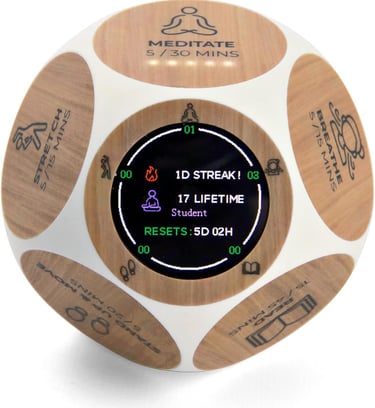
Sometimes I’ll set a simple visual timer for a short break — no phone, no scrolling, just letting my brain settle. I like using this Activity Timer & Tracker because it lets you track time without touching your phone. You can see the timer I use here:
You’d be surprised how different 20 quiet minutes can feel when nothing is buzzing for your attention.No one prepared us for this level of input.
You wake up and check your phone before your feet hit the floor. News headlines. Group texts. Work emails. Someone’s vacation photos. Someone’s promotion. A parenting reel that makes you question everything.
None of it feels dramatic. It just feels… normal. But your brain doesn’t experience it as neutral.
Even when you know social media is curated, your body still reacts. You see someone renovating their house and suddenly your kitchen feels outdated. Someone’s productivity routine makes your day feel messy. Someone’s fitness progress makes you feel behind.
And because the stimulation is constant — notifications, scrolling, background noise, podcasts while cooking, checking email during commercials — your nervous system never fully powers down.
It’s not panic-level stress. It’s more like a low hum. Always on.
And that low hum shows up in ways we don’t immediately connect to our phones:
Brain fog in the afternoon
Snapping at your partner over something small
Feeling exhausted but wide awake at bedtime
A vague sense that you’re behind in life — even if nothing is actually wrong
That’s the part we don’t talk about.
All that input — notifications, news, scrolling, messages — keeps your brain slightly activated. Not overwhelmed. Just… never fully at rest.
So what would happen if you didn’t fill every spare moment? Would you feel bored? Or relieved?
What if you let your mind wander while waiting in line?
What if you went to bed without one last scroll?
Sometimes when you create even a small pocket of space — no phone during a walk, no scrolling in bed, no notifications after 8 PM — something surprising happens.
Your thoughts get clearer. Your reactions soften.
You realize you were more overstimulated than you thought.
Digital burnout is sneaky because it doesn’t feel dramatic.
It sounds like:
“I’m just tired.”
“I’m just behind.”
“I’m just off today.”
But sometimes, you’re not behind.
You’re just overstimulated.
And your nervous system is asking for a little quiet.
Honestly? You deserve your attention back.